
How to Choose the Right Gate Valve for Your Industrial Project in 2024

Selecting the optimal gate valve for your 2024 industrial project requires careful consideration of valve types (gate, globe, ball, butterfly, check, and tank valves), operational demands, and industry standards. This guide empowers engineers, procurement specialists, and maintenance teams to evaluate critical factors like pressure ratings, material compatibility, and flow control efficiency. Discover how to balance performance requirements with cost-effectiveness while ensuring compliance with safety protocols.
Understanding Valve Types: Core Differences
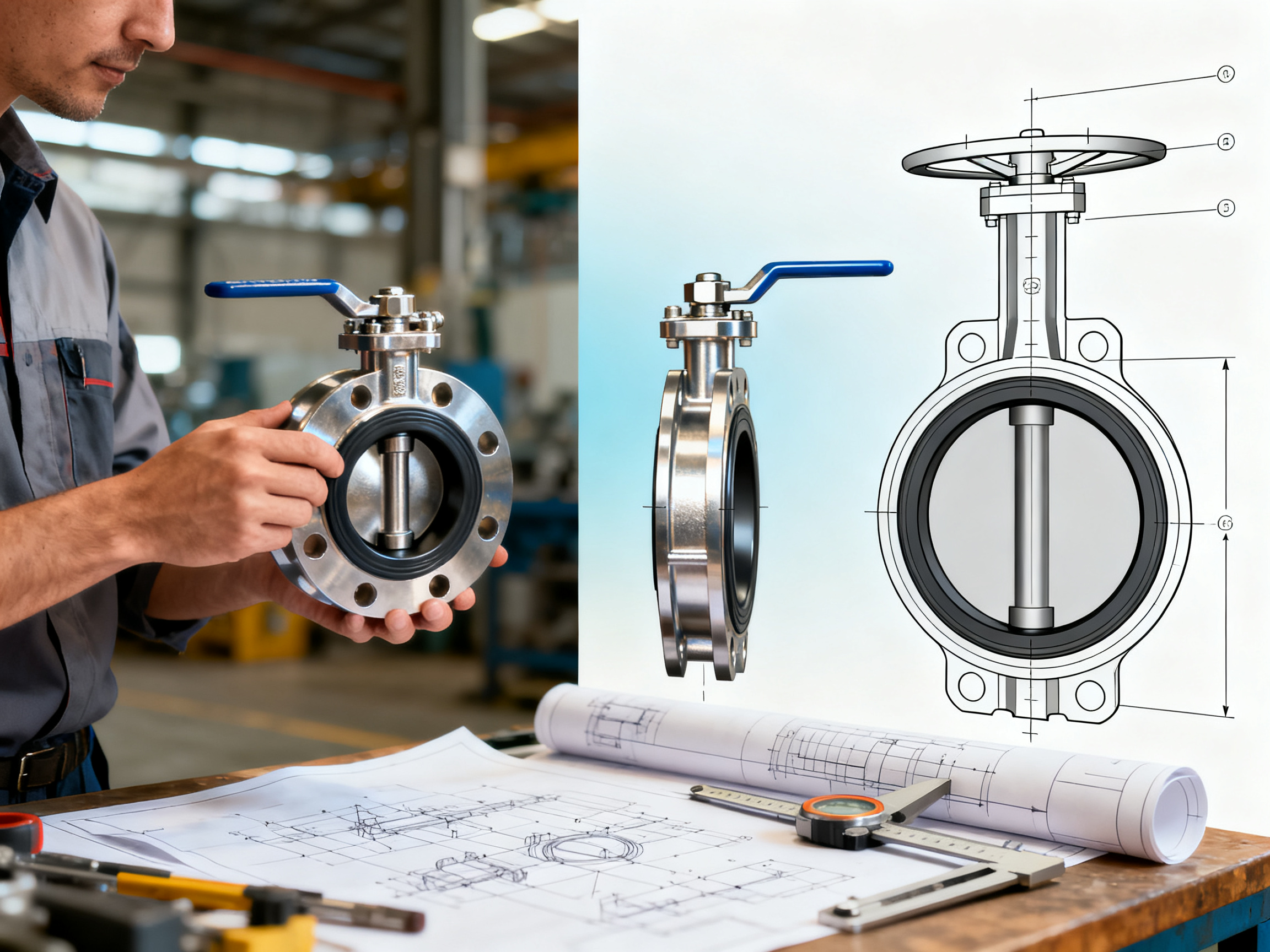
Industrial projects demand precise flow control solutions. Gate valves excel in full-flow or full-close applications with minimal pressure drop, while globe valves offer superior throttling capabilities. Ball valves provide quick shut-off in high-pressure systems, and butterfly valves deliver compact solutions for large-diameter pipelines. Check valves prevent backflow, and specialized tank valves handle viscous or corrosive media. The 2024 market sees increased demand for hybrid designs combining multiple functionalities.
Technical Specifications: What Engineers Must Verify
Pressure ratings (Class 150 to 2500) and temperature ranges (-196°C to 815°C) dictate valve selection. Material compatibility is paramount – ASTM A216 WCB suits general service, while duplex stainless steels resist chloride-induced stress corrosion. Flow characteristics (Cv values) impact system efficiency, with gate valves typically offering Cv values 30-50% higher than globe valves of comparable size. API 600/602/6D and ASME B16.34 certifications ensure mechanical integrity. For cryogenic applications, BS 6364 compliance is mandatory.
Procurement Decision Matrix: 6 Critical Factors
1. Operational Parameters: Match valve type to flow media (gas/liquid/slurry), pressure spikes, and temperature fluctuations
2. Maintenance Requirements: Ball valves need less frequent servicing than gate valves in dirty service
3. Total Cost of Ownership: Consider installation space, actuator costs, and mean time between failures
4. Industry-Specific Standards: Oil & gas projects require API 6D compliance; water systems follow AWWA standards
5. Actuation Method: Manual, pneumatic, electric, or hydraulic operation affects response time
6. Supplier Qualifications: Verify ISO 9001 certification and project references
Emerging Trends in Valve Technology
Smart valves with IIoT sensors enable predictive maintenance, reducing downtime by 40-60%. 3D-printed valve components now withstand 10,000+ PSI in aerospace applications. The global shift toward green hydrogen demands valves compatible with hydrogen embrittlement. Advanced sealing technologies like graphene-enhanced gaskets extend service life in abrasive media. By 2025, 35% of industrial valves will incorporate some level of digital monitoring per ARC Advisory Group forecasts.
Why Partner With Our Valve Solutions
With 15+ years serving Fortune 500 manufacturers, we provide:
• Custom-engineered gate valves meeting API/ASME/ISO standards
• Multi-vendor evaluation with lifecycle cost analysis
• Emergency replacement programs with 48-hour global dispatch
• On-site training for maintenance teams
• Digital twin simulations for valve performance optimization
Contact our fluid control specialists today for a free project assessment and valve selection checklist.

Send Us A Message